Anglican Frontier Missions
  • HOME
  • ABOUT
    • Who We Are
    • Our Board
    • Our Staff
    • Statements of Faith
    • Why AFM?
  • GIVE
  • GO
    • Application Forms
    • A Few Locations
      • India
      • Nigeria
      • Southeast Asia
    • Minister through Creative Arts
    • Opportunities for Clergy
    • Role Call: Cross-Cultural Apprenticeship
    • Strategy Coordinator
  • CONNECT
    • 📱 Social Media
    • Digital Missions Curricula
    • E-Newsletter and Prayer Updates
    • Invite Dr. Royer & Other AFM Speakers
    • Pray
    • Weekly Prayer Meetings
    • Resources – print
      • How To Form a Missions Committee
      • 10/40 Window
      • AGMP Mission Match
      • Articles/Sermons on Mission Frontiers
        • Anglican Frontier Missions, DOMA Churches, and the Global Missions Initiative: a Profile of Partnership
        • Currents of Change: How Did Everything become Missions?
        • The Great Confusion
        • How to Keep the Unreached Peoples…Unreached?
        • Pentecost and Prayer: Let Your Word be Spoken, heard, obeyed, through Him Who is the Word
        • ReforMission: Churches that Changed Their Minds
        • The Rise and Fall of Movements
        • Seeing From Another Perspective
        • Toward the Edges: Using the M Words
        • We Are Not All Missionaries, But We Are All on Mission!
        • What’s the Harm in Calling Everything Missions?
        • When Everything is Missions review (James Mason)
        • When Everything Is Missions review (Kevin DeYoung)
        • Zealous for the Things that Matter
        • 24:14 Goal: Movement engagements in every unreached people and place by 2025 (74 months)
      • Companion Dioceses, Global Partnerships, and UPGs
      • Eucharistic Healing of Nations
      • Perspectives Course
      • Reaching Hindus
      • Reaching Muslims
      • Suggested Books and Videos
    • Resources – video
      • AFM’s Heart for Frontier Peoples
      • ASAP Anglicanly
      • The Call to Nigeria
      • The Contextualizability of Anglicanism
      • Orality and Storying Scripture
      • Prayer Walk
      • Reaching Frontier People Groups
      • Reaching the Unreached
      • The Story of God
      • Tad de Bordenave on Mission
      • The Vision of AFM
      • Why You Should Go To The Mission Field
      • 25 Years of AFM
  • BLOG
  • CONTACT
  • HOME
  • ABOUT
    • Who We Are
    • Our Board
    • Our Staff
    • Statements of Faith
    • Why AFM?
  • GIVE
  • GO
    • Application Forms
    • A Few Locations
      • India
      • Nigeria
      • Southeast Asia
    • Minister through Creative Arts
    • Opportunities for Clergy
    • Role Call: Cross-Cultural Apprenticeship
    • Strategy Coordinator
  • CONNECT
    • 📱 Social Media
    • Digital Missions Curricula
    • E-Newsletter and Prayer Updates
    • Invite Dr. Royer & Other AFM Speakers
    • Pray
    • Weekly Prayer Meetings
    • Resources – print
      • How To Form a Missions Committee
      • 10/40 Window
      • AGMP Mission Match
      • Articles/Sermons on Mission Frontiers
        • Anglican Frontier Missions, DOMA Churches, and the Global Missions Initiative: a Profile of Partnership
        • Currents of Change: How Did Everything become Missions?
        • The Great Confusion
        • How to Keep the Unreached Peoples…Unreached?
        • Pentecost and Prayer: Let Your Word be Spoken, heard, obeyed, through Him Who is the Word
        • ReforMission: Churches that Changed Their Minds
        • The Rise and Fall of Movements
        • Seeing From Another Perspective
        • Toward the Edges: Using the M Words
        • We Are Not All Missionaries, But We Are All on Mission!
        • What’s the Harm in Calling Everything Missions?
        • When Everything is Missions review (James Mason)
        • When Everything Is Missions review (Kevin DeYoung)
        • Zealous for the Things that Matter
        • 24:14 Goal: Movement engagements in every unreached people and place by 2025 (74 months)
      • Companion Dioceses, Global Partnerships, and UPGs
      • Eucharistic Healing of Nations
      • Perspectives Course
      • Reaching Hindus
      • Reaching Muslims
      • Suggested Books and Videos
    • Resources – video
      • AFM’s Heart for Frontier Peoples
      • ASAP Anglicanly
      • The Call to Nigeria
      • The Contextualizability of Anglicanism
      • Orality and Storying Scripture
      • Prayer Walk
      • Reaching Frontier People Groups
      • Reaching the Unreached
      • The Story of God
      • Tad de Bordenave on Mission
      • The Vision of AFM
      • Why You Should Go To The Mission Field
      • 25 Years of AFM
  • BLOG
  • CONTACT
February 6, 2022

God’s Other Children: The Church in North Korea

The church in North Korea
by the Rev. Tad de Bordenave
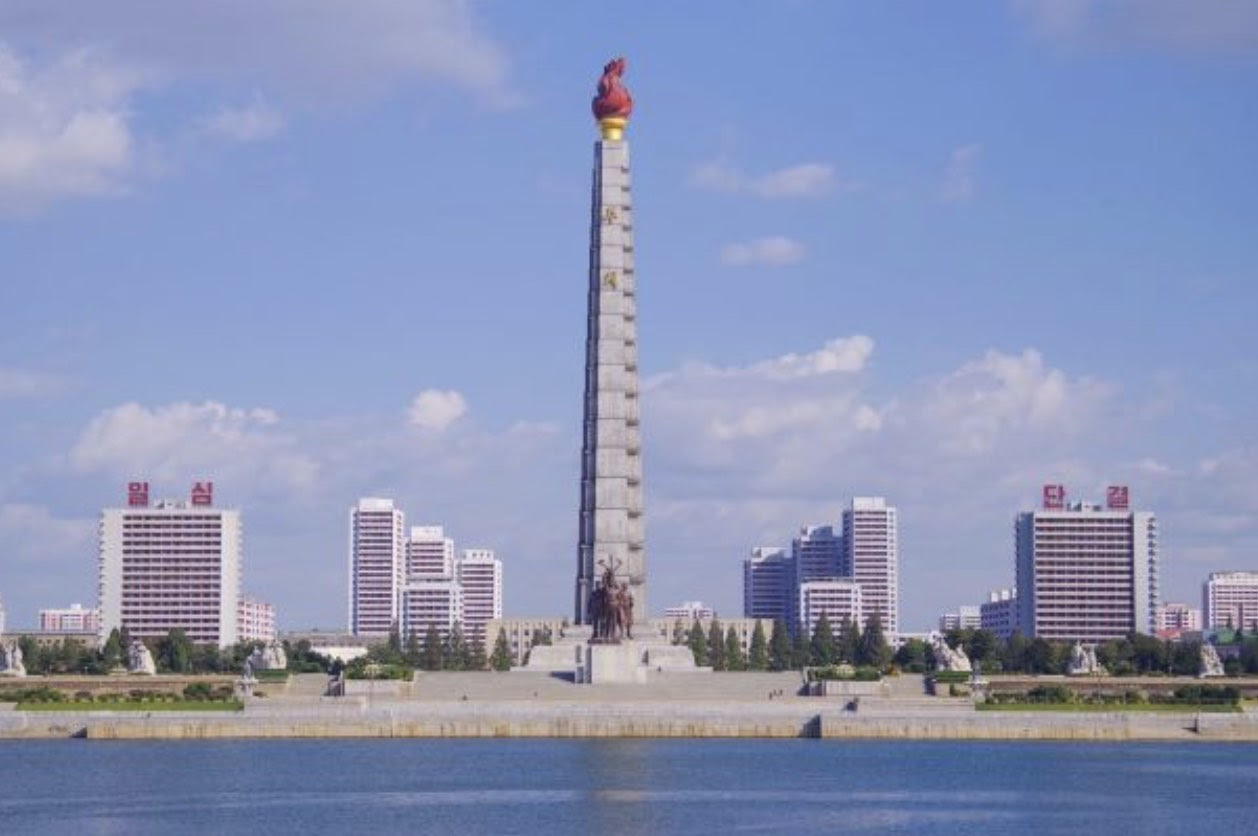
The photo at the top of the page shows the Judech Tower in the center of Pyongyang, North Korea. Judech is the official philosophy of the Hermit Kingdom that promotes the totalitarian regime of Kim Jong-un and the near deification of Kim and his family.This philosophy has laid the foundation for intense persecution of Christians. All wisdom, it teaches, lies in humankind, and no challenge to that is tolerated. Kim Il-sung, the grandfather of the present ruler, had Christians parents, but after he consolidated power following WWII, he began a brutal persecution of Christians. That persecution continues.

The followers of Jesus Christ in the Hermit Kingdom have always known persecution and torment. I will give the stories of two Christians which will reveal the cost of following Jesus Christ and God’s almighty desire for the North Koreans.

Robert Thomas was devoted to the Korean people, wanting them to know the love of Jesus. In 1866 he sailed inland on an American ship, The General Sherman.  The Koreans where they landed were so hostile that they burned the ship. Most of the crew were slaughtered as they swam to shore. Thomas made it to land, holding his red Korean Bible. Though he used the words for peace and Jesus to his captors, he was immediately beheaded.

The man who killed Thomas, named Park, took the pages of the Bible and used them to wallpaper his house. Later, after reading the pages, he made his commitment to the Lord Jesus Christ. Many others learned of the sacred pages and made the pilgrimmage to the home to read God’s Word. One of them, his nephew, also read the walls and was converted. Later he was part of the team that updated the translation.

This story brings out two distinctions of the church in the Hermit Kingdom. First is the anointing of the Kim dynasty. The official North Korean history of this event has an ancestor of Kim Il Sung as the hero, thus adding to the worship of Kim as clearly anointed to lead the people.

The other and more radiant piece we see is God using a mustard seed to grow and bring the fruit of his kingdom in years to come and all over the land. Proverbs tells us not to despise the day of small things. From the faith and the death of one missionary, from the pages of the Bible plastered on a wall of a remote home, God has not let the light of the gospel be extinguished.

Although the light is still visible today, so is the cost and the persecution of Christ’s followers. We see this in the second story, the life of a woman named Yang. Hers is a story of brutality, prison, and torture. It also is a tale of resilience and courage gained from her found faith in the Lord.

Her story begins around the year 1995. That was when the government wanted to expand the army. It diverted most food of the nation to feed the soldiers, resulting in the infamous famine in the late 1990s. In Yang’s village they were reduced to eating sand and bark off trees. The death toll in her village was about ten people every day for many months.

Yang escaped to China to make money for her family. There she worked in a noodle store whose owner was a Christian. It was under her influence that Yang became a follower of Jesus. When she returned to her village, a neighbor told the authorities that Yang was a Christian. That led to her arrest and first imprisonment. Her charge was treason because she refused to acknowledge Kim Il-sung as divine. In prison the tool of preference for her torture was a shovel. When she was released, she said her whole body was blue.

She escaped to China again, only to be kidnapped and kept locked in a room as a sex slave. After fleeing to Mongolia she contracted severe frostbite and dehydration. The authorities there sent her to Seoul for medical care. That is where she met other Christians and began a deeper discipleship.

The healing she experienced in Seoul was physical and emotional. Physically, the recovery from the trauma in Mongolia has been slow. She lost the toes on her left foot and lives with pain every day. Emotionally, the recovery has also been slow. Finding forgiveness for the several sources of torture and abuse has not been instantaneous. Knowing the certainty of Christ’s forgiveness of her has aided that process.

And the future she seeks? She loves the people of North Korea.  She wants them to know the love of Jesus the Messiah as she has found it. Yang is preparing to return to North Korea as a missionary to the people who persecuted her.

Through Yang we see the same two realities as with Robert Thomas. The cost of following Jesus is high, knowing the blows it will bring. Within that same heart, however, is the certainty of the love of Jesus for the people of the Hermit Kingdom. Yang will be an instrument of that heavenly vision.

I end these profiles of God’s Other Children with two questions for us: what can we offer, and what can we receive.

What we can offer? Prayer. Even if we wanted to send something – letters, money, food, books – they would not get through. But what they need is more than anything material. They need and long for the power of God. Paul showed its rightful priority when he reminded the church in Corinth that God showed most power when he, Paul, most knew his weakness. When aware of his affliction and total dependance on God was when he saw God’s mighty strength.

The Christians in North Korea send that request: Pray for us. Pray for courage, for forgiveness, for witness, for their persecutors, for opportunities to tell others of the love of the Savior.

What can we receive? the unsurpassed value of eternal gratification. That puts proper perspective on our culture of instant gratification. The Church in North Korea endures torture along with witness, often a death sentence for keeping a Bible. Why do they persevere? They know the future God has for them. When we live with the same certainty of eternity, we will live better.
November 7 is the International Day of Prayer for the Persecuted Church.
New Wineskins Missionary Network gives valuable and useful aids to use that day:
https://newwineskins.org/prayers-for-the-persecuted-churchThis site covers the issues, hopes, and needs of the church in North Korea:
https://www.northkoreanchristians.com

For guidance in praying for the church there:
https://worldhelp.net/how-to-pray-the-scriptures-for-christians-in-north-korea/

North Korea, by Todd Nettleton, published by Voice of the Martyrs covers their history, stories, and insights.

Previous StoryGod’s Other Children: Seeing the Face of Slaves
Next StoryGod’s Other Children: Hungry People in the Land of Chad

Related Articles

  • 3
    A Christmas Greeting from our Executive Director
    View Details
  • Giving Tuesday
    Is Giving Tuesday still a thing? The heart behind this special day and how you can join AFM
    View Details

Leave your comment Cancel Reply

(will not be shared)

General inquiries:
(804)-355-8468
Financial & donation inquiries:
(804)-349-0153
Office hours:
Monday-Thursday,
9 a.m.-4 p.m.
Mailing address:
P.O. Box 18038,
Richmond, VA, 23226

Anglican Frontier Missions © 2025